Tesla Delays Humanoid Robots to 2027
Tesla has pushed the launch of its Optimus robot to late next year, citing unresolved issues with hand durability and artificial intelligence.
By Thomas Reynolds ·
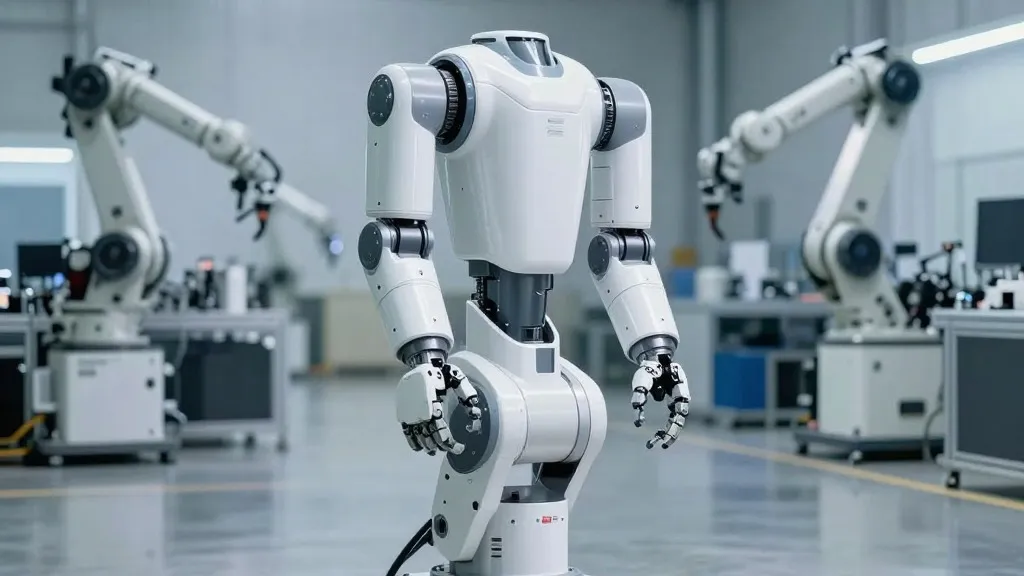
The race to build general-purpose humanoid robots remains fraught with technical hurdles, a reality Tesla reaffirmed this week. On its third-quarter 2026 earnings call, the company announced that external deliveries of the Optimus robot will not begin until the end of 2027.
CEO Elon Musk indicated that three primary factors are delaying the rollout: the robot’s artificial intelligence, its electromechanical design, and overall reliability. He noted that the hardware must withstand constant wear without degrading after just one month of use. Tesla expects to resolve these engineering challenges by the end of next year, at which point it plans to sell the units to industrial customers for dangerous, repetitive, or 24/7 tasks.
Production has already begun on Tesla’s high-volume line in Fremont, California, where Model S and X vehicles were previously assembled. While most of the infrastructure for a potential one-million-unit annual capacity is installed, Musk stated it will take at least a year to reach a rate of 20,000 units per week. This is because critical parts of the design are still undergoing changes. The company currently produces hundreds of units weekly, marking the first time it has manufactured what it considers "production-quality" bots.
The most significant hardware bottleneck appears to be the robot's hand. During the call, a Tesla engineer identified the hand and custom gears as the most difficult components to finalize. Musk explained that the fingers require a delicate balance: they must be soft enough to handle fragile objects but durable enough to survive continuous industrial use. Unlike human skin, robot hands cannot heal, making reliability a persistent challenge. Additionally, touch sensors have historically suffered from reliability issues, with the hand and forearm assembly involving more than 100 small parts.
On the software side, Tesla is addressing a lack of data compared to its automotive fleet. To train its AI, the company plans to build 10,000 to 20,000 robots that will practice tasks in a facility dubbed the Optimus Academy. This approach is necessary because the current AI architecture struggles to generalize to new tasks, often taking days to learn basic movements. Tesla also intends to integrate its AI5 chip into the robots around April 2027.
Musk claimed that no other company is "even close" to Tesla in developing a general-purpose humanoid. However, competitors are making comparable progress. XPeng activated an automated production line for its IRON robot in September, with mass production targeted for late 2026. Similarly, Boston Dynamics began producing its electric Atlas robot in January and has committed all 2026 deployments, including to Google DeepMind. Boston Dynamics has also opened a training center in Georgia to teach Atlas to sequence car parts for Hyundai’s assembly line.
These developments highlight that Tesla is not alone in facing these obstacles. While Tesla may have built the most robots, its competitors are deploying units in real-world settings. Boston Dynamics, for instance, has opted for sturdy grippers over human-like dexterity to prioritize industrial efficiency. As timelines slip from 2025 to late 2027, the industry faces a critical test: whether these machines can perform unscripted work reliably enough to justify their cost.
Tesla has promised a video within the next month or two demonstrating the robot performing non-pre-programmed tasks. If successful, it would validate the company’s progress. Until then, the delay underscores that building the robot is easier than making it useful. The next 12 months will determine if the late-2027 target is realistic or just another step in a long history of shifting deadlines.
Source: Electrek